Evolutionary Architecture: Building Systems That Adapt
Exploring architectural patterns and practices that enable systems to evolve gracefully over time while maintaining quality attributes.
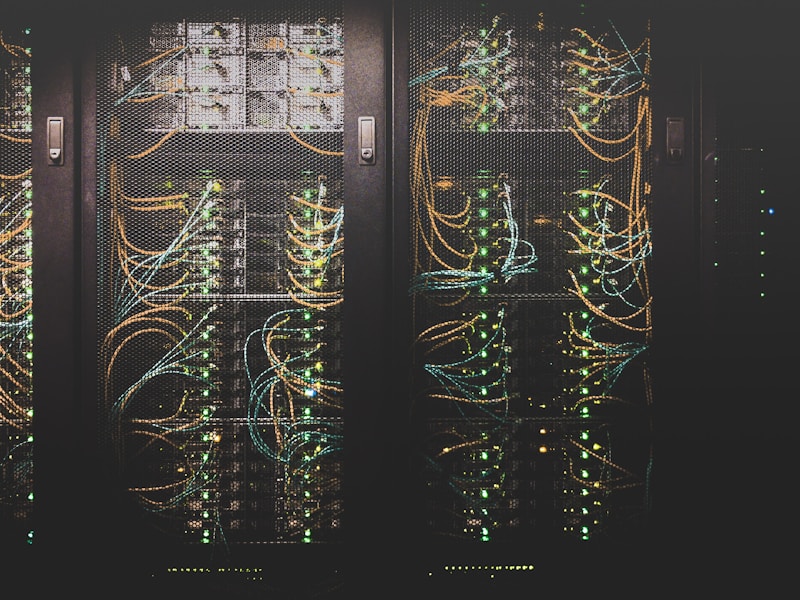
In today's fast-paced software landscape, building architectures that can adapt to change isn't just desirable - it's essential. Evolutionary architecture embraces the reality that requirements will change, technologies will evolve, and what worked yesterday might not work tomorrow.
The best architectures aren't designed perfectly upfront - they're designed to evolve. Start simple, measure continuously, and adapt based on real constraints and requirements.
What is Evolutionary Architecture?
Evolutionary architecture is an architectural approach that supports guided, incremental change across multiple dimensions. Unlike traditional "big design upfront" approaches, it acknowledges that we can't predict all future requirements and instead focuses on building systems that can adapt.
An evolutionary architecture supports guided, incremental change as a first principle across multiple dimensions. It's not about predicting the future - it's about being ready when it arrives.
The Three Pillars of Evolutionary Architecture
- Fitness Functions
- Automated checks that ensure your architecture maintains its quality attributes as it evolves. Think of them as unit tests for your architecture - they verify that performance, security, coupling, and other critical characteristics stay within acceptable bounds.
- Incremental Change
- Small, reversible changes instead of massive rewrites. Each change is low-risk, provides quick feedback, and can be rolled back if problems arise. This approach reduces risk while accelerating delivery.
- Appropriate Coupling
- Understanding where to couple and where to decouple. Not all coupling is bad - the key is making intentional decisions about module boundaries, dependencies, and integration points.
1. Fitness Functions: Architecture Tests
Fitness functions are your first line of defense against architectural degradation. Without them, quality attributes erode gradually until you're forced into a painful rewrite.
Types of Fitness Functions
- Performance budgets - API response times must stay under 200ms at p95
- Dependency rules - Core domain cannot depend on infrastructure concerns
- Security scans - No vulnerable dependencies reach production
- Coupling metrics - Maximum allowed dependencies between modules
- Code coverage thresholds - Critical paths maintain 80%+ test coverage
Fitness Function Example: Dependency Rules

// Ensure core domain doesn't depend on infrastructure
[Test]
public void CoreDomain_ShouldNotDependOn_Infrastructure()
{
    var coreAssembly = typeof(DomainEntity).Assembly;
    var infraAssembly = typeof(DatabaseContext).Assembly;

    var result = Types.InAssembly(coreAssembly)
        .ShouldNot()
        .HaveDependencyOn(infraAssembly.GetName().Name)
        .GetResult();

    Assert.True(result.IsSuccessful,
        "Core domain must not depend on infrastructure layer");
}

// Performance fitness function
[Test]
public async Task OrderApi_ShouldRespond_Within200ms()
{
    var stopwatch = Stopwatch.StartNew();

    await _client.GetAsync("/api/orders/123");

    stopwatch.Stop();
    Assert.True(stopwatch.ElapsedMilliseconds < 200,
        $"API responded in {stopwatch.ElapsedMilliseconds}ms (budget: 200ms)");
}Fitness functions only work if they run automatically. Integrate them into your build pipeline so architectural violations break the build, not the production system.
2. Incremental Change Over Big Bang Rewrites
The most successful architectural transformations happen gradually, not overnight. Incremental change reduces risk, maintains business continuity, and provides constant feedback.
Patterns for Incremental Evolution
- Strangler Fig Pattern
- Gradually replace legacy systems by routing new features to new implementations while legacy features continue running. Over time, the new system "strangles" the old one until nothing remains.
- Branch by Abstraction
- Create an abstraction layer over the code you want to change, migrate implementations incrementally behind the abstraction, then remove the abstraction once complete.
- Parallel Run
- Run new and old systems side-by-side, comparing results to validate correctness before cutover. Particularly useful for critical business logic transformations.
- Feature Flags
- Deploy changes in a disabled state, then gradually enable for increasing percentages of traffic. Provides instant rollback capability and enables A/B testing of architectural changes.
Big bang rewrites
"Let's spend 18 months rewriting the entire system in microservices, then flip the switch."
High risk, delayed value delivery, and requirements will change during the 18-month rewrite.
Incremental transformation
"Let's extract the order processing module this sprint, validate in production, then continue module by module."
Low risk, continuous value delivery, and ability to adjust course based on feedback.
3. Building for Evolution: Key Patterns
Certain architectural patterns naturally support evolution. They create the flexibility needed to adapt without requiring complete rewrites.
Modular Monoliths: The Starting Point
Don't start with microservices. Start with a well-structured modular monolith with clear module boundaries. This gives you 90% of microservices benefits with 10% of the operational complexity.
Modular Monolith Structure - Different Module Compositions

MyApp/
├── Modules/
│   ├── Orders/                    // Complex business logic
│   │   ├── Domain/
│   │   ├── Application/
│   │   ├── Infrastructure/
│   │   └── Endpoints/
│   │
│   ├── Catalog/                   // Simpler requirements
│   │   ├── Handlers/
│   │   └── Data/
│   │
│   ├── Shipping/                  // Complex business logic
│   │   ├── Domain/
│   │   ├── Application/
│   │   ├── Infrastructure/
│   │   └── Endpoints/
│   │
│   ├── Notifications/             // Simpler requirements
│   │   ├── Services/
│   │   └── Templates/
│   │
│   └── Analytics/                 // Simpler requirements
│       ├── Consumers/
│       └── Queries/
│
└── SharedKernel/

// Modules adapt their structure based on complexity
// Simple modules stay simple, complex ones get proper layeringDon't cargo-cult Netflix's architecture. They have hundreds of engineers and billions of requests. Your 5-person team with 1000 users probably doesn't need 50 microservices. Start modular, extract services only when you have clear organizational or scaling reasons.
Event-Driven Architecture: Natural Evolution Seams
Events provide loose coupling that enables evolution. New event handlers can be added without modifying existing code. Systems can be split or merged by redirecting event flows.
Evolution Through Events

public record OrderPlacedEvent(
    Guid OrderId,
    decimal TotalAmount,
    DateTime PlacedAt,
    List<OrderItem> Items
);

// Original handlers
public class InventoryReservationHandler
    : IEventHandler<OrderPlacedEvent>
{
    public async Task Handle(OrderPlacedEvent @event)
    {
        await _inventory.ReserveItems(@event.Items);
    }
}

// New handler added 6 months later - no changes to existing code!
public class FraudDetectionHandler
    : IEventHandler<OrderPlacedEvent>
{
    public async Task Handle(OrderPlacedEvent @event)
    {
        if (@event.TotalAmount > 1000)
            await _fraudService.CheckOrder(@event.OrderId);
    }
}

// Another handler added for new analytics requirement
public class OrderAnalyticsHandler
    : IEventHandler<OrderPlacedEvent>
{
    public async Task Handle(OrderPlacedEvent @event)
    {
        await _analytics.TrackOrder(@event);
    }
}
Hexagonal Architecture: Swap Dependencies
Isolate core business logic from external concerns through ports and adapters. This makes it trivial to swap databases, message brokers, or external APIs without touching business rules.
- Core domain defines interfaces (ports) for what it needs
- Infrastructure implements adapters that fulfill those interfaces
- Swap PostgreSQL for MongoDB? Change one adapter, domain stays untouched
- Replace REST API with GraphQL? New adapter, same domain logic
4. Enabling Practices: The Foundation
Evolutionary architecture requires supporting practices. You can't evolve quickly without automation, observability, and confidence in your changes.
Continuous Delivery: Deploy Changes Fast
Automated deployment pipelines are non-negotiable. If deploying takes 3 days of manual work, you won't make small, frequent changes - you'll batch them into risky big releases.
- Automated builds and tests on every commit
- Push-button deployments to all environments
- Blue-green or canary deployments for zero-downtime releases
- Automated rollback on fitness function failures
Comprehensive Testing Strategy
A strong test suite gives you confidence to make changes. Without it, fear prevents evolution.
- Unit tests - Fast, business logic focused
- Integration tests - Module boundaries, database
- Contract tests - Service APIs, event schemas
- Architecture tests - Fitness functions
- E2E tests - Critical user journeys only
- Business rules and domain logic (exhaustive)
- Integration points (happy path + errors)
- Performance budgets (automated benchmarks)
- Security constraints (dependency scans)
Observability: Measure to Evolve
You can't evolve what you can't measure. Comprehensive observability allows you to understand system behavior, verify changes, and detect problems early.
- Structured logging with correlation IDs across service boundaries
- Metrics dashboards for business and technical KPIs
- Distributed tracing to understand request flows
- Alerting on fitness function violations and SLO breaches
Real-World Evolution: 10x Platform Scaling
In my experience scaling a distributed platform 10x, we applied evolutionary architecture principles that enabled continuous adaptation without a rewrite.
The Evolution Journey
- Phase 1: Modular Foundation
- Started with a modular monolith organized by domain contexts. Clear module boundaries with dependency rules enforced by fitness functions. This gave us architectural flexibility from day one.
- Phase 2: Event Sourcing Introduction
- Added event sourcing incrementally for critical state management (orders, inventory). Used strangler fig pattern to migrate existing features. Feature flags controlled rollout to production traffic.
- Phase 3: Service Extraction
- Extracted services only when scaling pressure demanded it. Inventory service separated first due to different scaling characteristics. Each extraction was validated through parallel run before cutover.
- Phase 4: CQRS Optimization
- Introduced CQRS pattern for read-heavy modules using feature flags. Maintained both code paths initially, validated performance improvements, then removed legacy read path.
This evolutionary approach allowed us to scale 10x without a full rewrite, maintaining system stability and feature delivery throughout the transformation. Small changes, continuous validation, constant evolution.
We never stopped delivering features. Each architectural improvement was delivered incrementally while product development continued at full speed. Evolution, not revolution.
Common Pitfalls and How to Avoid Them
1. Over-Engineering for Hypothetical Future
Build for imaginary scale
"We might need to scale to 1M users someday, so let's build a complex distributed system now."
Build for current needs, design for evolution
"We have 1000 users. Let's build a simple system with clear boundaries so we can scale when we actually need to."
2. Ignoring Fitness Functions
Without automated checks, architectural quality degrades invisibly. By the time you notice, the damage is severe and expensive to fix.
Make them part of your CI/CD pipeline. Treat architectural violations like test failures - they break the build and must be fixed before merging.
3. Big Bang Migrations
The temptation to "just rewrite it" is strong, especially when facing legacy technical debt. Resist. Incremental migration is almost always safer, faster, and more successful.
- Identify the highest-value module to extract first
- Create abstraction layer to isolate the module
- Implement new version behind feature flag
- Run parallel and validate results match
- Gradually shift traffic to new implementation
- Repeat for next module
Your Evolutionary Architecture Action Plan
Evolutionary architecture isn't about predicting the future - it's about building systems that can adapt when the future arrives. Start small, measure continuously, and evolve based on real constraints and requirements.
You don't need to transform your entire architecture overnight. Pick one practice, implement it well, then expand. Small improvements compound into architectural excellence.
This Week's Action Items
- Write one fitness function for your most critical quality attribute
- Identify module boundaries in your current system and document them
- Add feature flags to your deployment pipeline
- Set up basic observability (logging, metrics) for one critical service
- Pick one small change to make incrementally instead of in a big bang
Long-Term Practices to Adopt
- Review and expand fitness functions quarterly
- Enforce module boundaries through automated tests
- Use strangler fig pattern for legacy system modernization
- Make all architectural changes reversible through abstraction
- Document architectural decisions in ADRs with explicit trade-offs
- Measure the impact of every architectural change
The goal isn't to build the perfect architecture today. It's to build an architecture that can become perfect tomorrow, and different-but-still-perfect the day after that.
Evolutionary architecture embraces change as inevitable and provides the tools, patterns, and practices to adapt gracefully. Start with modular design, automate architectural checks, make small reversible changes, and measure everything. Your architecture will evolve to meet whatever challenges the future brings.
Want to Work Together?
I help engineering teams deliver scalable systems through technical leadership, architecture guidance, and hands on mentoring. Let's discuss how I can help your team.